Contact Us
Address: 145 A, Red Hills Rd, Barathy Nagar, Valluvar Nagar, Villivakkam, Chennai, Tamil Nadu 600049
Follow Us

Blog

Sekkadi
Wood Pressed Groundnut Oil
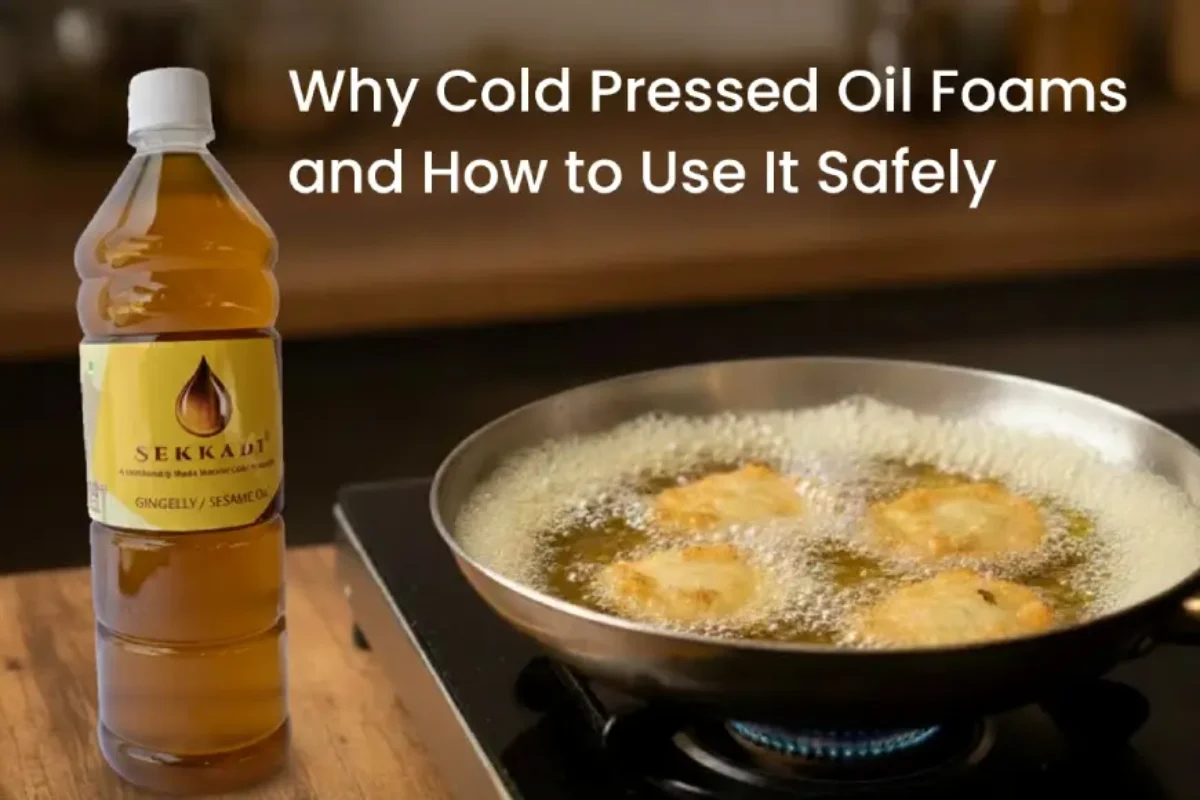
Why Cold Pressed Oil Foams and How to Use It Safely
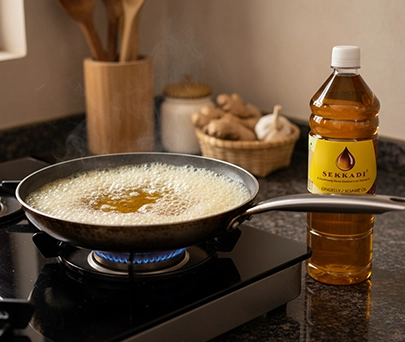
Why Cold Pressed Oil Foams and How to Use It Safely

Introduction

Cold pressed oil, such as sesame (gingelly), groundnut, and coconut oil, is widely appreciated for its natural extraction process, rich flavor, and health benefits. However, many users notice that these oils foam when heated, especially during summer or rainy seasons. This can be surprising for those used to refined oils, but foaming is completely natural.

In this blog, we’ll explain why cold pressed oil foams, how it differs from refined oils, and practical tips for cooking safely while enjoying the full benefits of Sekkadi cold pressed oils.

Understanding Foaming in Cold Pressed Oil

Cold pressed oil is extracted without heat or chemicals, which helps retain its natural nutrients, aroma, and flavor. When you heat these oils, foam formation is common. This occurs due to:

  • Natural compounds in the oil : Minerals and proteins in cold pressed oil react when heated
  • Moisture content: Even small amounts of water in the oil or vessel can cause bubbling
  • Seasonal humidity: Higher humidity during monsoon and winter increases foaming

Foaming is not a sign of poor quality. On the contrary, it indicates that the oil is pure, natural, and unrefined.

Role of Moisture, Sunlight, and Sedimentation in Cold Pressed Oil

The primary reason for foam formation in cold pressed oil is natural moisture content. This moisture is influenced by seasonal sunlight availability, especially during winter and rainy seasons.

At Sekkadi, oils are extracted using a traditional cold-press method, followed by a natural sedimentation process. During this process, foam and fine particles are allowed to settle naturally.

  • We do not use high heat to remove moisture
  • The oil is kept for sedimentation so that soil particles naturally settle down
  • Sunlight plays a key role in this process

During sedimentation, the oil is exposed to natural sunlight. In summer, strong UV rays help the moisture evaporate within 2–3 days. However, in winter and the rainy season, sunlight is weaker and less consistent, so moisture takes
3–5 days to evaporate.

We intentionally follow this slow sedimentation method because:

  • UV rays help preserve natural minerals and vitamins
  • No artificial heat means nutrients remain intact
  • The oil stays pure and traditional, just as it was made earlier

Because moisture is not forcefully removed, some foaming may still occur, especially in winter and monsoon seasons.

Why Refined Oils Don’t Foam

Unlike cold pressed oils, refined oils rarely foam when heated. The reason lies in their processing:

  1. Chemical refining removes natural moisture, minerals, and nutrients
  2. Anti-foaming agents such as polydimethylsiloxane are added

While refined oils look clear and foam-free, they lack the natural goodness, aroma, and nutritional value of cold pressed oils like Sekkadi.

Why Cold Pressed Oil Foams and How to Use It Safely

Is Foaming Harmful?

Foaming in cold pressed oil is completely safe and does not affect quality or nutrition.

Only avoid the oil if:

  • It smells rancid
  • It tastes bitter or unpleasant

Otherwise, foaming is a natural sign of authenticity.

Simple Ways to Reduce Foaming

1. Use Tamarind (Traditional Method)

  • Make a small tamarind ball (about 1 inch)
  • Fry it in oil for 1–2 minutes
  • Tamarind absorbs excess moisture and reduces foam

This method works especially well for sesame, groundnut, and coconut oils.

2. Moderate Heat

Avoid high flame. Use medium heat to reduce bubbling and preserve nutrients.

3. Fry a Small Piece of Raw Rice

A tiny piece of raw rice absorbs moisture quickly and helps control foaming.

Seasonal Factors That Affect Foaming

Foaming levels change with seasons due to sunlight and moisture:

  • Summer: Strong sunlight helps reduce moisture during sedimentation, resulting in less foaming
  • Winter & Monsoon: Limited UV rays prevent full moisture evaporation, causing more foaming

Even though sedimentation takes longer in winter and rainy seasons, Sekkadi does not use artificial heat to speed up the process. This ensures the oil retains its natural minerals and vitamins obtained through sunlight, even if mild foaming remains.

Tamarind and tamarind extract are traditionally used to balance this moisture, which is why they are highly effective in reducing foaming during cooking.

Benefits of Using Cold Pressed Oil

  • Rich in nutrients, vitamins, and antioxidants
  • Authentic aroma and taste
  • Free from chemicals, preservatives, and additives

Choosing Sekkadi cold pressed oil means choosing purity over convenience.

Tips for Storing and Using Cold Pressed Oil

  1. Store in a cool, dry place
  2. Always check aroma before use
  3. Use tamarind or raw rice to control foaming
  4. Avoid overheating

Conclusion

Foaming in cold pressed oil is a natural and harmless process caused by moisture, sunlight exposure, and traditional sedimentation methods. Unlike refined oils, Sekkadi cold pressed oils retain their nutrients without artificial heat or chemicals.

By understanding seasonal changes and using simple traditional techniques, you can enjoy healthier, tastier cooking every day.

Happy Customers

I have been using Sekkadi for more then 2 yrs. We regularly purchase groundnut and sesame oil. Impresed with the quality and prompt deliver service. The oil has very good aroma and taste. Definitely it has made our recipes tastier while also healthier. There is huge difference in taste as well as quality of food when cooked with sekkadi oils vs regular refined oil. I am sure anyone using it will feel it the first instance itself. Notably the sekkadi oil generates a lot of foam while cooking. This is good indicator for a quality cold pressed oil. Since the cold press process does not remove residual moisture in the oil, it generates foam when heated. We are extremely satisfied with the quality of oil and prompt service. Also their price very reasonable. We highly recommend using Sekkadi oils for healthy cooking.

user-icon
Geetha Karthick Murari

Our Cold Pressed Oil Products

Order online or visit our shop directly